
How Arrest Warrants Work in Macon County
Tennessee builds its arrest-warrant process on a written complaint or examination showing probable cause. The warrant itself authorizes an arrest. It is not a search warrant. Nor is it a public online roster. Macon County's judges page lists separate Circuit and Criminal Court judges, while General Sessions handles misdemeanors, preliminary felony hearings, and traffic matters. For felony work, the county's map shows Criminal Court alongside Circuit Court. The public route for Circuit and General Sessions records is the Macon County Circuit Court Clerk. Which court issued the order depends on the case. Read the court name on the notice. Guessing from the charge alone can send you to the wrong office.
Macon County Probable-Cause Warrants
Tennessee Code § 40-6-205 lets a magistrate issue a warrant after a written complaint or examination supports probable cause. Section 40-6-208 lists what the document must carry. That includes the defendant, the offense, the county, and the issuing magistrate, plus the complaint or affidavit behind it. Those statutes describe the legal process. What a portal shows is a separate matter. Search warrants work differently. Title 40 applies its own probable-cause and particularity rules to the place, property, or person to be searched. A search warrant is not an arrest-warrant lookup result. Macon County publishes no local public portal for search-warrant releases or returns. The official 2025 Tennessee Code volume contains these provisions.
Arrest Warrants: What They Contain
If a Macon County clerk hands you a warrant document, read it closely. Check the name, offense, county, and issuing magistrate. Ask what the complaint or affidavit reference means. A case number and issue date help staff pull the file fast. Service and return entries are added through a separate process, so that question may need to go to the serving agency itself.
| Warrant number | No public Macon sample or warrant-number format was observed. |
|---|---|
| Person and offense | Read the person and charge as stated in the document; confirm a match with the clerk. |
| Issuing court | Identify the county or municipal court that authorized the process. |
| Complaint or affidavit | Ask the clerk which filing is part of the record and whether it may be released. |
| Bond or status | No Macon portal field or bond schedule was verified; ask the court. |
Macon County Courts Have Different Warrant Roles
Criminal Court handles felony trial work in Macon County. Circuit Court sits beside it as the companion general-jurisdiction trial court. General Sessions handles misdemeanors, preliminary felony hearings, and traffic. Records for these courts route through the Circuit Court Clerk at the Justice Center. Lafayette and Red Boiling Springs city judges can issue municipal ordinance process, which belongs with the city channel rather than the county clerk. These roles show where a matter may be filed. They are not a warrant-assignment chart. The county's public pages do not list which judge or serving agency handles each warrant category, so ask the clerk named for the case before calling another office. The county judges page shows the Circuit, Criminal and General Sessions court groups. The public directory helps route a court question. It does not identify a warrant subject.
How Warrants Get Served in Macon County
The court issues the order in Macon County, but service can fall to several agencies. The Sheriff's Office may serve it. A constable or municipal police may carry it out too. The county's constable page describes sworn, bonded peace officers with arrest powers and county-limited duties. It assigns no warrant types to any constable district. The sheriff page lists deputies and court deputies. It shows no public warrant division or service schedule. Call the Sheriff's Office to ask who answers a personal service question. The published first number doubles as a tip hotline, not a warrant desk. Surrender hours are not posted. The page states no bond window or walk-in warrant counter. The county's page explains the constables' public role but gives no warrant-allocation list.
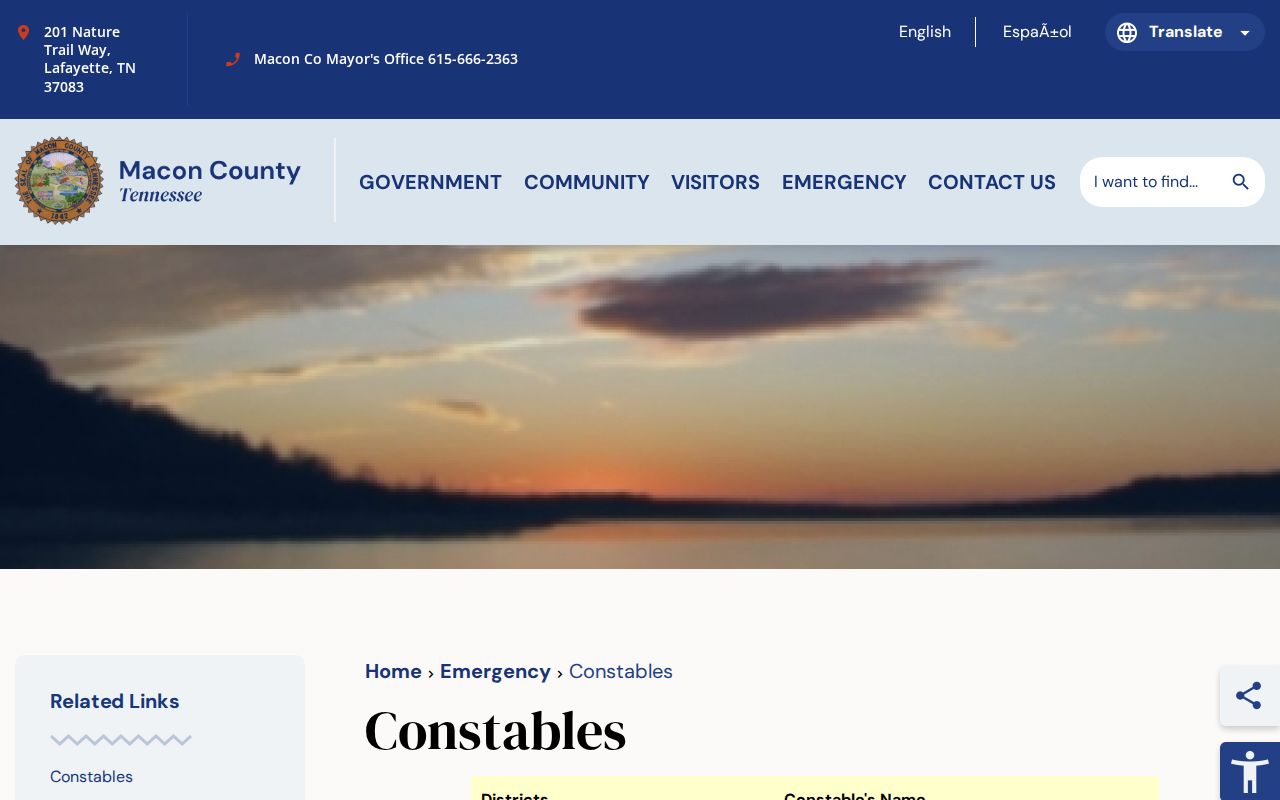
A visit from a constable or a Macon County sheriff's deputy is no substitute for calling the issuing court about the order.
Macon County Arrest Status Search
The online case search covers Circuit Court and General Sessions information for Macon County. You can search by Party Name or Case Reference, year, number, court type, and case type. The form offers no warrant-number or warrant-status field. Bond, date of birth, and serving agency are missing too. Use the search to find a related file. Then ask the clerk whether an arrest warrant exists and what the record says. The portal terms disclaim an accuracy warranty. They also warn that information can change without notice. A blank result does not prove that no warrant exists. The case may be new, restricted, municipal, or held in another jurisdiction. For more than a case search, use the Macon County warrant-check steps to find the right clerk and request route.
Arrest Warrants, Summonses, and Bench Warrants
A summons tells a person to appear in court. An arrest warrant authorizes arrest through a probable-cause process. A bench warrant usually follows a missed court date or another court-process event. Tennessee Code § 40-6-215 covers issuing a summons instead of a warrant, but the label on any Macon County record comes from the issuing court. Confirm the local case there.
| Process | Purpose | First local question |
|---|---|---|
| Arrest warrant | Authorize arrest after statutory probable-cause steps | Which court issued it, and what agency serves it? |
| Summons | Direct a person to appear without immediate arrest | What date and court are printed on the summons? |
| Bench warrant | Address a missed appearance or court-process issue | Which court set the matter and what does it require? |
| Search warrant | Authorize a particular search under separate rules | Which legal process and record is being requested? |
Macon County Federal Arrest Warrants
Macon County sits in the Northeastern Division of the U.S. District Court for the Middle District of Tennessee. Federal dockets live apart from that system. Searching the Macon County case portal won't reach them. PACER handles federal case access instead, while the U.S. Marshals Service and its Middle Tennessee Joint Fugitive Task Force carry their own fugitive duties. The division lists the Cookeville courthouse at 9 East Broad Street, reachable at 615-736-5498. PACER's pricing page lays out the per-page charges and the quarterly threshold, so check current rates before searching. Courthouse access is free under its guidance. The Northeastern Division page shows where Macon County fits.
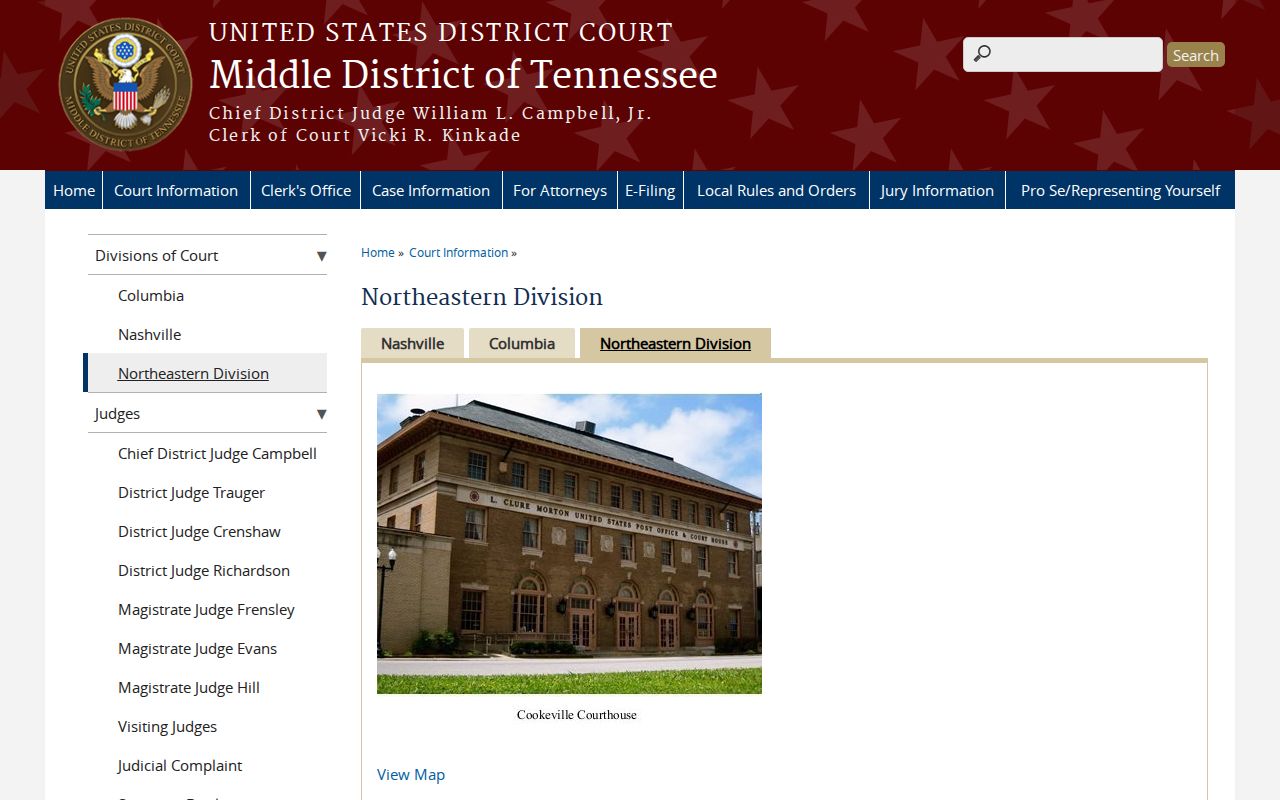
Federal channels stay apart from Macon County's local Circuit and General Sessions search. The PACER pricing page explains the docket fees.
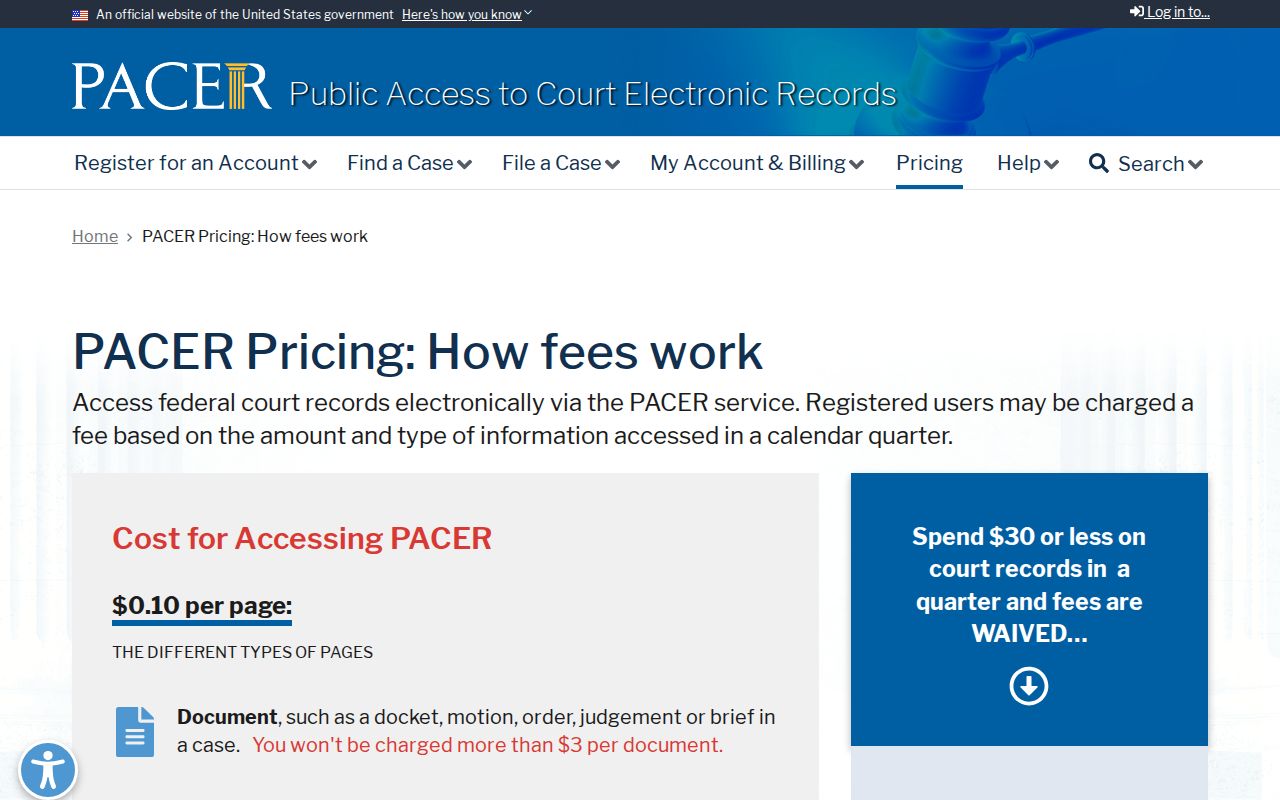
Federal case access does not search local Macon County files.
Handling an Arrest Warrant in Your Name
Think an arrest warrant carries your name? Call the issuing clerk and ask what the current order says. A lawyer can advise whether a motion, a voluntary appearance, or bond fits. Then confirm the details. Ask the clerk and the Sheriff's Office where to report, the date and time, identification needs, and whether counsel can attend. Macon County publishes no surrender window, bond schedule, or payment method.
Confirm before going: A portal result cannot verify current arrest-warrant status; speak with the issuing court and an attorney about a safe next step.
Paying a fee does not clear the case. Nor does a call to the sheriff recall the court's order. Ask what hearing remains after bond or appearance. For broader local routing, start with the Macon County warrant records overview.
Macon County Warrant Service Roles
A judge or magistrate authorizes the process. Law enforcement executes it. The Macon County constables page describes arrest powers and training, but it won't say which warrants a constable serves or which districts take an assignment. The sheriff page offers no complete service map either. So ask the issuing clerk who handles service. Then call that named agency. The Sheriff's Office can explain its service instructions while the court controls its own order, and no Macon-specific bond amount, surrender schedule, or after-hours procedure is published.